

LP Agent
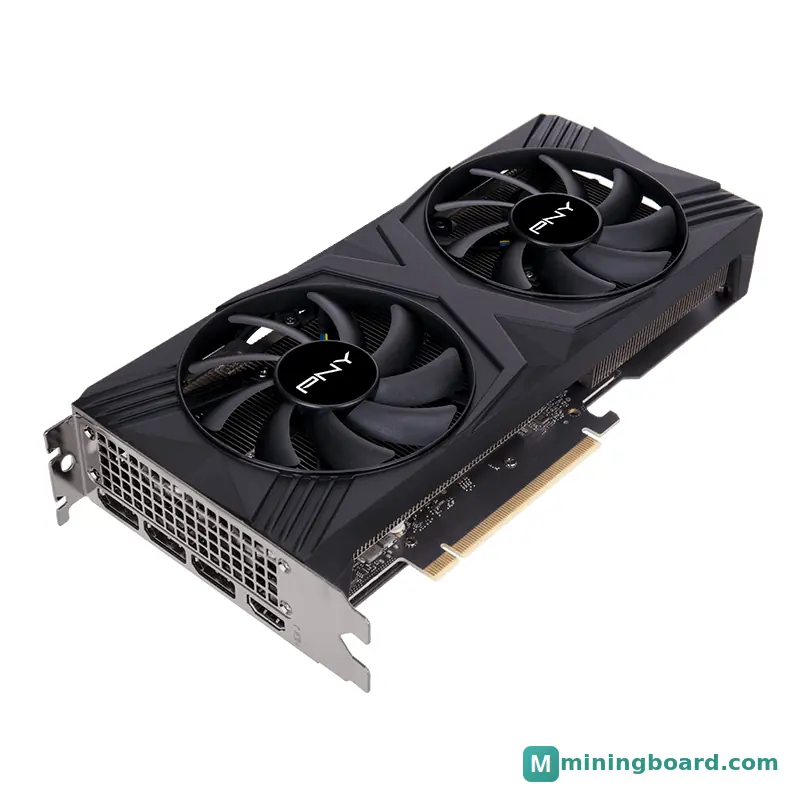
Nvidia RTX 4060 Ti
Nvidia RTX 4060 Ti genera hasta $1.16 al día, mejor en alquiler de IA a $0.06/h con 14 ofertas. También disponible: minando Octopus a 33.4158 Mh/s ($0.15/día) and venta de hashpower KAWPOW ($-0.14/día). Consume 129 W de la red — a $0.10/kWh, rentable a los precios actuales.
Toca para cambiar · 8 secciones Resumen 1/8
Proyección diaria
Ganadores diarios entre todos los streams — promediados del historial registrado del rig a $0.1/kWh
| Período | /Día | /Mes |
|---|---|---|
| Ingresos | $1.47 | $44.14 |
|
Costo
$0.1/kWh
|
$0.31 | $9.30 |
| Ganancia | $1.16 | $34.84 |
Mezcla de consenso interno — derivada de fuentes externas, no una cotización directa de un solo mercado.
LP Agent
Historial de pagos de minería
| Período | /Día | /Mes |
|---|---|---|
| Ingresos | $0.49 | $14.70 |
|
Costo
$0.1/kWh
|
$0.31 | $9.30 |
| Ganancia | $0.18 | $5.40 |
Mezcla de consenso interno — derivada de fuentes externas, no una cotización directa de un solo mercado.
| Algoritmo | Neto / día |
|---|---|
|
OCT
Octopus
★ Mejor
33.4158 Mh/s · 129.0 W
|
$0.18 |
|
KAW
KAWPOW
16.5489 Mh/s · 133.0 W
|
$-0.22 |
|
AUT
Autolykos2
77.5671 Mh/s · 96.0 W
|
$-0.27 |
|
ETC
Etchash
33.7155 Mh/s · 102.0 W
|
$-0.29 |
|
NEX
NexaPoW
11.3222 Mh/s · 63.0 W
|
$-0.30 |
|
LYR
Lyra2REv2
79.7942 Mh/s · 170.0 W
|
$-0.31 |
|
KHE
KHeavyHash
706.4096 Mh/s · 158.0 W
|
$-0.31 |
|
ETH
Ethash
33.7155 Mh/s · 102.0 W
|
$-0.31 |
|
BLA
Blake (2s)
7.6096 Gh/s · 175.0 W
|
$-0.31 |
|
VER
VerusHash
10.4735 Mh/s · 122.0 W
|
$-0.31 |
|
LYR
Lyra2z
6.2355 Mh/s · 95.0 W
|
$-0.31 |
|
X16
X16R
19.8281 Mh/s · 159.0 W
|
$-0.31 |
|
EQU
Equihash210_9
278 Hh/s · 153.0 W
|
$-0.31 |
|
X16
X16Rv2
18.1676 Mh/s · 154.0 W
|
$-0.31 |
|
KEC
Keccak
1.3643 Gh/s · 153.0 W
|
$-0.31 |
|
KAR
KarlsenHashV2
1.0555 Gh/s · 63.0 W
|
$-0.31 |
|
EQU
Equihash192_7
33 Hh/s · 149.0 W
|
$-0.31 |
|
ZHA
Zhash
63 Hh/s · 157.0 W
|
$-0.31 |
|
NEO
NeoScrypt
1.4938 Mh/s · 90.0 W
|
$-0.31 |
| Coin | Algorithm | Ingresos | Costo | Ganancia |
|---|---|---|---|---|
CFX
⚠
Conflux
|
Octopus
33.4158Mh · 129.0W
|
$0.49 | $0.31 | $0.18 |
|
RVN
Ravencoin
|
KAWPOW
16.5489Mh · 133.0W
|
$0.09 | $0.32 | $-0.23 |
ERG
⚠
Ergo
|
Autolykos2
77.5671Mh · 96.0W
|
$0.04 | $0.23 | $-0.19 |
|
ETC
Ethereum Classic
|
Etchash
33.7155Mh · 102.0W
|
$0.02 | $0.24 | $-0.22 |
NEXA
⚠
Nexa
|
NexaPoW
11.3222Mh · 63.0W
|
$0.01 | $0.15 | $-0.14 |
|
MONA
⚠
Monacoin
|
Lyra2REv2
79.7942Mh · 170.0W
|
— | $0.41 | — |
KAS
Kaspa
|
KHeavyHash
706.4096Mh · 158.0W
|
— | $0.38 | — |
|
—
|
Ethash
33.7155Mh · 102.0W
|
— | $0.24 | — |
|
—
|
Blake (2s)
7.6096Gh · 175.0W
|
— | $0.42 | — |
|
VRSC
⚠
Verus
|
VerusHash
10.4735Mh · 122.0W
|
— | $0.29 | — |
ACM
⚠
Actinium
|
Lyra2z
6.2355Mh · 95.0W
|
— | $0.23 | — |
|
—
|
Ubqhash
33.487Mh · 114.0W
|
— | $0.27 | — |
|
—
|
Keccak-C
1.3367Gh · 155.0W
|
— | $0.37 | — |
|
—
|
X16R
19.8281Mh · 159.0W
|
— | $0.38 | — |
|
—
|
Equihash(144,5)
62Hh · 150.0W
|
— | $0.36 | — |
|
—
|
ProgPowSERO
16.9997Mh · 154.0W
|
— | $0.37 | — |
|
—
|
Equihash210_9
278Hh · 153.0W
|
— | $0.37 | — |
|
—
|
ProgPowZ
16.7331Mh · 153.0W
|
— | $0.37 | — |
|
—
|
Curvehash
2.0578Mh · 99.0W
|
— | $0.24 | — |
|
—
|
Radiant
752.9697Mh · 150.0W
|
— | $0.36 | — |
|
—
|
Tribus
46.0465Mh · 168.0W
|
— | $0.40 | — |
|
—
|
X16Rv2
18.1676Mh · 154.0W
|
— | $0.37 | — |
|
VTC
⚠
Vertcoin
|
Verthash
583.5097Kh · 91.0W
|
— | $0.22 | — |
|
—
|
Keccak
1.3643Gh · 153.0W
|
— | $0.37 | — |
|
—
|
PHI1612
31.4102Mh · 140.0W
|
— | $0.34 | — |
|
—
|
KarlsenHashV2
1.0555Gh · 63.0W
|
— | $0.15 | — |
|
—
|
BCD
24.0577Mh · 160.0W
|
— | $0.38 | — |
|
—
|
X25X
2.4172Mh · 77.0W
|
— | $0.18 | — |
|
—
|
HeavyHash
508.4924Mh · 160.0W
|
— | $0.38 | — |
|
—
|
Equihash192_7
33Hh · 149.0W
|
— | $0.36 | — |
FIRO
Firo
|
FiroPoW
16.8109Mh · 148.0W
|
— | $0.36 | — |
|
—
|
GhostRider
885Hh · 97.0W
|
— | $0.23 | — |
|
—
|
X16RT
19.7751Mh · 157.0W
|
— | $0.38 | — |
|
—
|
X21S
13.7849Mh · 150.0W
|
— | $0.36 | — |
|
—
|
Equihash(125,4)
53.573Hh · 159.0W
|
— | $0.38 | — |
|
LTZ
⚠
Litecoinz
|
Zhash
63Hh · 157.0W
|
— | $0.38 | — |
|
FTC
⚠
Feathercoin
|
NeoScrypt
1.4938Mh · 90.0W
|
— | $0.22 | — |
Historial de ingresos netos por alquiler
| Período | /Día | /Mes |
|---|---|---|
| Ingresos | $1.47 | $44.10 |
|
Costo
$0.1/kWh
|
$0.31 | $9.30 |
| Ganancia | $1.16 | $34.80 |
Mezcla de consenso interno — derivada de fuentes externas, no una cotización directa de un solo mercado.
Flujo de ingresos Cómo Nvidia RTX 4060 Ti gana en el mercado de GPU para IA how we got $1.16/day · ▾
Historial de pagos del hashmarket
| Período | /Día | /Mes |
|---|---|---|
| Ingresos | $0.17 | $4.97 |
|
Costo
$0.1/kWh
|
$0.31 | $9.30 |
| Ganancia | $-0.14 | $-4.33 |
Mezcla de consenso interno — derivada de fuentes externas, no una cotización directa de un solo mercado.
MRR
· KAWPOW
· $-0.05/day
MRR
Visitar on MRR →
| Rigs × Qty | Share | Rev /rig/day | Cost /rig/day | Profit /rig/day | Total profit /day |
|---|---|---|---|---|---|
| — | — | — | — | — | — |
Periodo de recuperación para Nvidia RTX 4060 Ti
Modela la recuperación de la inversión, el coste eléctrico y la rentabilidad del primer año para este equipo.
Hardware recuperado cuando la línea cruza cero. Después, todo ganancia.
| Month | Earned (mo) | Cost burned (mo) | Cumulative earned | Cumulative cost | Net | % ROI |
|---|
Emisiones anuales por fuente
Basado en el consumo eléctrico anual y la intensidad de carbono de redes comunes.
| Fuente de energía | CO₂e / año |
|---|---|
| Wind | 12.26 kg |
| Nuclear | 13.37 kg |
| Hydroelectric | 26.75 kg |
| Geothermal | 42.35 kg |
| Solar | 50.16 kg |
| Biofuels | 256.35 kg |
| Gas | 546.13 kg |
| Coal | 913.94 kg |
Solo estimaciones — las emisiones reales varían.
¿Qué significa eso realmente?
At the world-average grid intensity of about 475 g CO₂e/kWh, Nvidia RTX 4060 Ti running 24/7 for a year releases about 529 kg of carbon dioxide equivalent. Here's what that looks like in everyday terms:
Dónde lo enchufas importa
Electricity is not one thing. A kilowatt-hour from a coal plant carries roughly 820 g of CO₂; the same kilowatt-hour from a hydro reservoir carries about 24 g. That's a 34× difference — large enough that Nvidia RTX 4060 Ti's annual footprint swings from roughly 914 kg on coal-heavy grids down to about 27 kg on hydro-dominated grids. The single biggest lever a miner has on their carbon footprint is choosing where to plug in.
Regions commonly used for low-carbon crypto mining include Quebec and British Columbia (hydro-dominated, typically <50 g CO₂/kWh), Iceland and Norway (geothermal + hydro, often <30 g), Paraguay (Itaipú hydro), and parts of the US Pacific Northwest. Coal-heavy grids — Kazakhstan, Inner Mongolia, Poland, parts of Australia — sit at the opposite end, often above 700 g CO₂/kWh.
Some operators also reduce their net impact by using otherwise-wasted energy: flare gas at oil wells (burning methane that would be vented anyway), curtailed renewables (wind or solar that the grid can't absorb), or behind-the-meter hydro during off-peak hours. These arrangements can drop effective emissions below the local grid average because the energy would have been wasted or flared without the mining load.
Cómo reducir la huella de este equipo
- Pick a greener ASIC. The efficiency column above matters as much as the grid: a 15 J/TH rig emits roughly half the CO₂ of a 30 J/TH rig for the same hashrate.
- Choose a low-carbon host. Data centres advertising hydro, geothermal, or nuclear power typically sit at <100 g CO₂/kWh.
- Look for stranded or curtailed energy. Flare-gas miners, wind-curtailment co-location, and off-peak hydro arrangements use energy that would otherwise be wasted.
- Use heat recovery. Capturing the heat for greenhouse agriculture, pool heating, or district warmth offsets fossil-fuel heating that would have been burned anyway.
- Time-shift your uptime. In grids with high daytime solar, running more during the day and less at night lowers your effective intensity even if you don't switch providers.
- Purchase verifiable offsets. Treat this as a last resort, not a substitute — and favour additional, permanent, third-party-verified projects (Gold Standard, Verra VCS).
Preguntas frecuentes
Yearly electricity use = rig power (W) × 24 × 365 ÷ 1000. We multiply that by each row's grid intensity in grams CO₂-equivalent per kWh and convert to kilograms. Intensities are representative averages — real emissions depend on your specific utility mix, time of day, and local transmission losses.
It depends almost entirely on where the electricity comes from. A single rig plugged into hydro in Quebec emits less over a year than an average family's two cars in a month. The same rig on a coal-dominated grid can exceed that in a few days. The hardware is the same — the grid is what changes the answer.
Network-wide estimates vary by methodology; the Cambridge Centre for Alternative Finance's Bitcoin Electricity Consumption Index is the most widely cited reference. As of recent reporting, the network's sustainable-energy share has grown as more hashrate migrates to hydro, wind, solar, and stranded-gas sites. This page just estimates a single rig — for the big picture, CCAF's dashboard is the best source.
Not directly. The rig draws the same wattage regardless of which pool it joins or how difficulty trends — so its electricity use, and therefore its emissions, stay constant. Those factors change revenue, not power consumption.
Toca para cambiar · 8 secciones Resumen 1/8
Proyección diaria
Ganadores diarios entre todos los streams — promediados del historial registrado del rig a $0.1/kWh
| Período | /Día | /Mes |
|---|---|---|
| Ingresos | $1.47 | $44.14 |
|
Costo
$0.1/kWh
|
$0.31 | $9.30 |
| Ganancia | $1.16 | $34.84 |
Mezcla de consenso interno — derivada de fuentes externas, no una cotización directa de un solo mercado.
Historial de pagos de minería
| Período | /Día | /Mes |
|---|---|---|
| Ingresos | $0.49 | $14.70 |
|
Costo
$0.1/kWh
|
$0.31 | $9.30 |
| Ganancia | $0.18 | $5.40 |
Mezcla de consenso interno — derivada de fuentes externas, no una cotización directa de un solo mercado.
| Algoritmo | Neto / día |
|---|---|
|
OCT
Octopus
★ Mejor
33.4158 Mh/s · 129.0 W
|
$0.18 |
|
KAW
KAWPOW
16.5489 Mh/s · 133.0 W
|
$-0.22 |
|
AUT
Autolykos2
77.5671 Mh/s · 96.0 W
|
$-0.27 |
|
ETC
Etchash
33.7155 Mh/s · 102.0 W
|
$-0.29 |
|
NEX
NexaPoW
11.3222 Mh/s · 63.0 W
|
$-0.30 |
|
LYR
Lyra2REv2
79.7942 Mh/s · 170.0 W
|
$-0.31 |
|
KHE
KHeavyHash
706.4096 Mh/s · 158.0 W
|
$-0.31 |
|
ETH
Ethash
33.7155 Mh/s · 102.0 W
|
$-0.31 |
|
BLA
Blake (2s)
7.6096 Gh/s · 175.0 W
|
$-0.31 |
|
VER
VerusHash
10.4735 Mh/s · 122.0 W
|
$-0.31 |
|
LYR
Lyra2z
6.2355 Mh/s · 95.0 W
|
$-0.31 |
|
X16
X16R
19.8281 Mh/s · 159.0 W
|
$-0.31 |
|
EQU
Equihash210_9
278 Hh/s · 153.0 W
|
$-0.31 |
|
X16
X16Rv2
18.1676 Mh/s · 154.0 W
|
$-0.31 |
|
KEC
Keccak
1.3643 Gh/s · 153.0 W
|
$-0.31 |
|
KAR
KarlsenHashV2
1.0555 Gh/s · 63.0 W
|
$-0.31 |
|
EQU
Equihash192_7
33 Hh/s · 149.0 W
|
$-0.31 |
|
ZHA
Zhash
63 Hh/s · 157.0 W
|
$-0.31 |
|
NEO
NeoScrypt
1.4938 Mh/s · 90.0 W
|
$-0.31 |
| Coin | Algorithm | Ingresos | Costo | Ganancia |
|---|---|---|---|---|
CFX
⚠
Conflux
|
Octopus
33.4158Mh · 129.0W
|
$0.49 | $0.31 | $0.18 |
|
RVN
Ravencoin
|
KAWPOW
16.5489Mh · 133.0W
|
$0.09 | $0.32 | $-0.23 |
ERG
⚠
Ergo
|
Autolykos2
77.5671Mh · 96.0W
|
$0.04 | $0.23 | $-0.19 |
|
ETC
Ethereum Classic
|
Etchash
33.7155Mh · 102.0W
|
$0.02 | $0.24 | $-0.22 |
NEXA
⚠
Nexa
|
NexaPoW
11.3222Mh · 63.0W
|
$0.01 | $0.15 | $-0.14 |
|
MONA
⚠
Monacoin
|
Lyra2REv2
79.7942Mh · 170.0W
|
— | $0.41 | — |
KAS
Kaspa
|
KHeavyHash
706.4096Mh · 158.0W
|
— | $0.38 | — |
|
—
|
Ethash
33.7155Mh · 102.0W
|
— | $0.24 | — |
|
—
|
Blake (2s)
7.6096Gh · 175.0W
|
— | $0.42 | — |
|
VRSC
⚠
Verus
|
VerusHash
10.4735Mh · 122.0W
|
— | $0.29 | — |
ACM
⚠
Actinium
|
Lyra2z
6.2355Mh · 95.0W
|
— | $0.23 | — |
|
—
|
Ubqhash
33.487Mh · 114.0W
|
— | $0.27 | — |
|
—
|
Keccak-C
1.3367Gh · 155.0W
|
— | $0.37 | — |
|
—
|
X16R
19.8281Mh · 159.0W
|
— | $0.38 | — |
|
—
|
Equihash(144,5)
62Hh · 150.0W
|
— | $0.36 | — |
|
—
|
ProgPowSERO
16.9997Mh · 154.0W
|
— | $0.37 | — |
|
—
|
Equihash210_9
278Hh · 153.0W
|
— | $0.37 | — |
|
—
|
ProgPowZ
16.7331Mh · 153.0W
|
— | $0.37 | — |
|
—
|
Curvehash
2.0578Mh · 99.0W
|
— | $0.24 | — |
|
—
|
Radiant
752.9697Mh · 150.0W
|
— | $0.36 | — |
|
—
|
Tribus
46.0465Mh · 168.0W
|
— | $0.40 | — |
|
—
|
X16Rv2
18.1676Mh · 154.0W
|
— | $0.37 | — |
|
VTC
⚠
Vertcoin
|
Verthash
583.5097Kh · 91.0W
|
— | $0.22 | — |
|
—
|
Keccak
1.3643Gh · 153.0W
|
— | $0.37 | — |
|
—
|
PHI1612
31.4102Mh · 140.0W
|
— | $0.34 | — |
|
—
|
KarlsenHashV2
1.0555Gh · 63.0W
|
— | $0.15 | — |
|
—
|
BCD
24.0577Mh · 160.0W
|
— | $0.38 | — |
|
—
|
X25X
2.4172Mh · 77.0W
|
— | $0.18 | — |
|
—
|
HeavyHash
508.4924Mh · 160.0W
|
— | $0.38 | — |
|
—
|
Equihash192_7
33Hh · 149.0W
|
— | $0.36 | — |
FIRO
Firo
|
FiroPoW
16.8109Mh · 148.0W
|
— | $0.36 | — |
|
—
|
GhostRider
885Hh · 97.0W
|
— | $0.23 | — |
|
—
|
X16RT
19.7751Mh · 157.0W
|
— | $0.38 | — |
|
—
|
X21S
13.7849Mh · 150.0W
|
— | $0.36 | — |
|
—
|
Equihash(125,4)
53.573Hh · 159.0W
|
— | $0.38 | — |
|
LTZ
⚠
Litecoinz
|
Zhash
63Hh · 157.0W
|
— | $0.38 | — |
|
FTC
⚠
Feathercoin
|
NeoScrypt
1.4938Mh · 90.0W
|
— | $0.22 | — |
Historial de ingresos netos por alquiler
| Período | /Día | /Mes |
|---|---|---|
| Ingresos | $1.47 | $44.10 |
|
Costo
$0.1/kWh
|
$0.31 | $9.30 |
| Ganancia | $1.16 | $34.80 |
Mezcla de consenso interno — derivada de fuentes externas, no una cotización directa de un solo mercado.
Flujo de ingresos Cómo Nvidia RTX 4060 Ti gana en el mercado de GPU para IA how we got $1.16/day · ▾
Historial de pagos del hashmarket
| Período | /Día | /Mes |
|---|---|---|
| Ingresos | $0.17 | $4.97 |
|
Costo
$0.1/kWh
|
$0.31 | $9.30 |
| Ganancia | $-0.14 | $-4.33 |
Mezcla de consenso interno — derivada de fuentes externas, no una cotización directa de un solo mercado.
MRR
· KAWPOW
· $-0.05/day
MRR
Visitar on MRR →
| Rigs × Qty | Share | Rev /rig/day | Cost /rig/day | Profit /rig/day | Total profit /day |
|---|---|---|---|---|---|
| — | — | — | — | — | — |
Periodo de recuperación para Nvidia RTX 4060 Ti
Modela la recuperación de la inversión, el coste eléctrico y la rentabilidad del primer año para este equipo.
Hardware recuperado cuando la línea cruza cero. Después, todo ganancia.
| Month | Earned (mo) | Cost burned (mo) | Cumulative earned | Cumulative cost | Net | % ROI |
|---|
Emisiones anuales por fuente
Basado en el consumo eléctrico anual y la intensidad de carbono de redes comunes.
| Fuente de energía | CO₂e / año |
|---|---|
| Wind | 12.26 kg |
| Nuclear | 13.37 kg |
| Hydroelectric | 26.75 kg |
| Geothermal | 42.35 kg |
| Solar | 50.16 kg |
| Biofuels | 256.35 kg |
| Gas | 546.13 kg |
| Coal | 913.94 kg |
Solo estimaciones — las emisiones reales varían.
¿Qué significa eso realmente?
At the world-average grid intensity of about 475 g CO₂e/kWh, Nvidia RTX 4060 Ti running 24/7 for a year releases about 529 kg of carbon dioxide equivalent. Here's what that looks like in everyday terms:
Dónde lo enchufas importa
Electricity is not one thing. A kilowatt-hour from a coal plant carries roughly 820 g of CO₂; the same kilowatt-hour from a hydro reservoir carries about 24 g. That's a 34× difference — large enough that Nvidia RTX 4060 Ti's annual footprint swings from roughly 914 kg on coal-heavy grids down to about 27 kg on hydro-dominated grids. The single biggest lever a miner has on their carbon footprint is choosing where to plug in.
Regions commonly used for low-carbon crypto mining include Quebec and British Columbia (hydro-dominated, typically <50 g CO₂/kWh), Iceland and Norway (geothermal + hydro, often <30 g), Paraguay (Itaipú hydro), and parts of the US Pacific Northwest. Coal-heavy grids — Kazakhstan, Inner Mongolia, Poland, parts of Australia — sit at the opposite end, often above 700 g CO₂/kWh.
Some operators also reduce their net impact by using otherwise-wasted energy: flare gas at oil wells (burning methane that would be vented anyway), curtailed renewables (wind or solar that the grid can't absorb), or behind-the-meter hydro during off-peak hours. These arrangements can drop effective emissions below the local grid average because the energy would have been wasted or flared without the mining load.
Cómo reducir la huella de este equipo
- Pick a greener ASIC. The efficiency column above matters as much as the grid: a 15 J/TH rig emits roughly half the CO₂ of a 30 J/TH rig for the same hashrate.
- Choose a low-carbon host. Data centres advertising hydro, geothermal, or nuclear power typically sit at <100 g CO₂/kWh.
- Look for stranded or curtailed energy. Flare-gas miners, wind-curtailment co-location, and off-peak hydro arrangements use energy that would otherwise be wasted.
- Use heat recovery. Capturing the heat for greenhouse agriculture, pool heating, or district warmth offsets fossil-fuel heating that would have been burned anyway.
- Time-shift your uptime. In grids with high daytime solar, running more during the day and less at night lowers your effective intensity even if you don't switch providers.
- Purchase verifiable offsets. Treat this as a last resort, not a substitute — and favour additional, permanent, third-party-verified projects (Gold Standard, Verra VCS).
Preguntas frecuentes
Yearly electricity use = rig power (W) × 24 × 365 ÷ 1000. We multiply that by each row's grid intensity in grams CO₂-equivalent per kWh and convert to kilograms. Intensities are representative averages — real emissions depend on your specific utility mix, time of day, and local transmission losses.
It depends almost entirely on where the electricity comes from. A single rig plugged into hydro in Quebec emits less over a year than an average family's two cars in a month. The same rig on a coal-dominated grid can exceed that in a few days. The hardware is the same — the grid is what changes the answer.
Network-wide estimates vary by methodology; the Cambridge Centre for Alternative Finance's Bitcoin Electricity Consumption Index is the most widely cited reference. As of recent reporting, the network's sustainable-energy share has grown as more hashrate migrates to hydro, wind, solar, and stranded-gas sites. This page just estimates a single rig — for the big picture, CCAF's dashboard is the best source.
Not directly. The rig draws the same wattage regardless of which pool it joins or how difficulty trends — so its electricity use, and therefore its emissions, stay constant. Those factors change revenue, not power consumption.